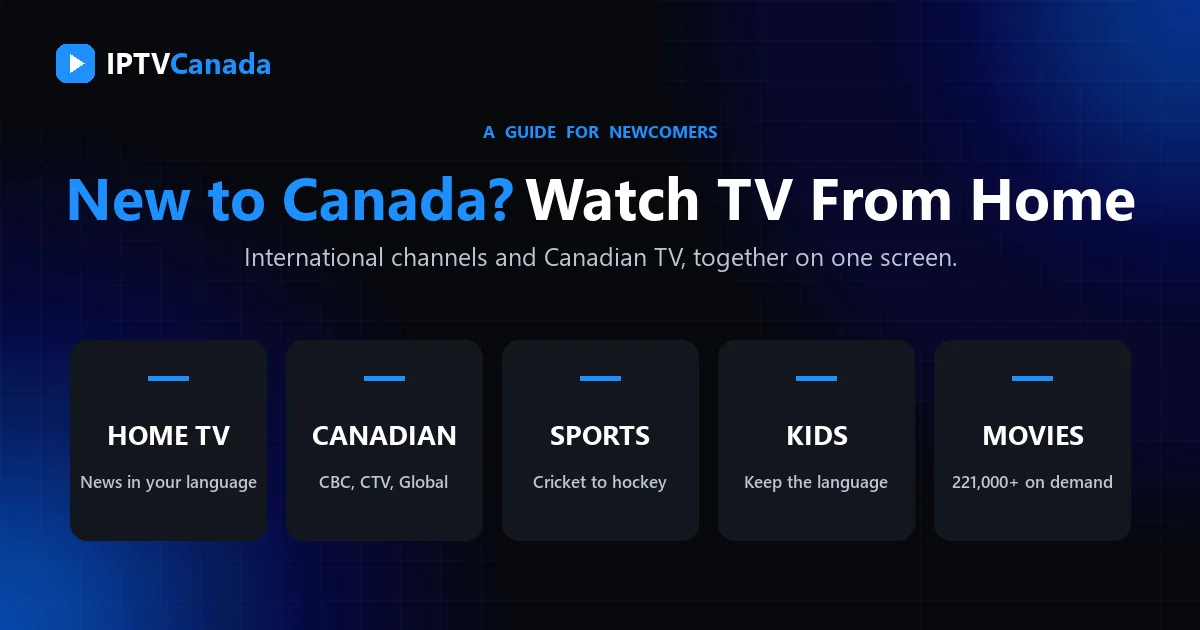
New to cord-cutting? The acronyms can be confusing. This guide explains what IPTV is, how it works and why it’s replacing cable in so many Canadian homes.
For decades, TV reached us one way: a signal from a satellite dish or a cable wired into the house. The internet changed all that.
Today, huge numbers of viewers are switching to IPTV. Maybe you’ve heard friends talk about “cutting the cord”. But what is IPTV, exactly — and why is it so much cheaper than a standard Rogers or Bell package?
Let’s break it down.
What Is IPTV? The Simple Definition
IPTV stands for Internet Protocol Television.
It delivers TV shows and video using the same internet technology (TCP/IP) that brings you emails and web pages — instead of broadcast antennas, cable lines or satellite signals.
So rather than a signal travelling through a cable buried in the ground, the show you pick arrives through your regular internet connection.
The Key Difference
- Cable: sends every channel to your home at once, and you “tune in” to one.
- IPTV: sends only what you ask for. Pick a channel and the server streams that one to your device.
How Does IPTV Work?
Here’s what happens when you use an IPTV subscription:
- Storage: live channels and on-demand shows sit on servers.
- Request: you choose a channel, and your device asks the server for it.
- Transmission: the server splits the video into small data packets and sends them over the internet.
- Playback: your Firestick, Smart TV or Android box puts the packets back together and plays the video in real time.
Because everything travels over your internet, your connection matters. Aim for at least 25 Mbps for smooth HD and 50 Mbps for 4K.
The 3 Types of IPTV
1. Live TV
The direct replacement for cable: shows as they air. This is how you watch the Super Bowl, CBC News or Hockey Night in Canada live.
- Examples: Sportsnet+ and live channels from IPTV providers.
2. Video on Demand (VOD)
Works like the big streaming apps. Movies and series are stored on a server and you watch whenever you like — pause, rewind, fast-forward.
- Example: the “Movies” section of your IPTV app.
3. Catch-Up TV (Time-Shifted)
A handy feature from premium providers: watch a live broadcast that aired hours or even days ago. The server keeps a recording so you can replay what you missed.
What Do You Need to Watch IPTV?
No clunky rented box. You probably already own what you need:
- High-speed internet: a stable connection, ideally wired with Ethernet.
- A streaming device:
- Smart TVs: Samsung, LG or Android TV.
- Streaming sticks: Amazon Firestick 4K or Chromecast with Google TV.
- IPTV boxes: NVIDIA Shield, Formuler Z11 and similar.
- An IPTV player app: such as IPTV Smarters Pro, TiviMate or XCIPTV. Enter your login and you’re in.
Why People Switch From Cable
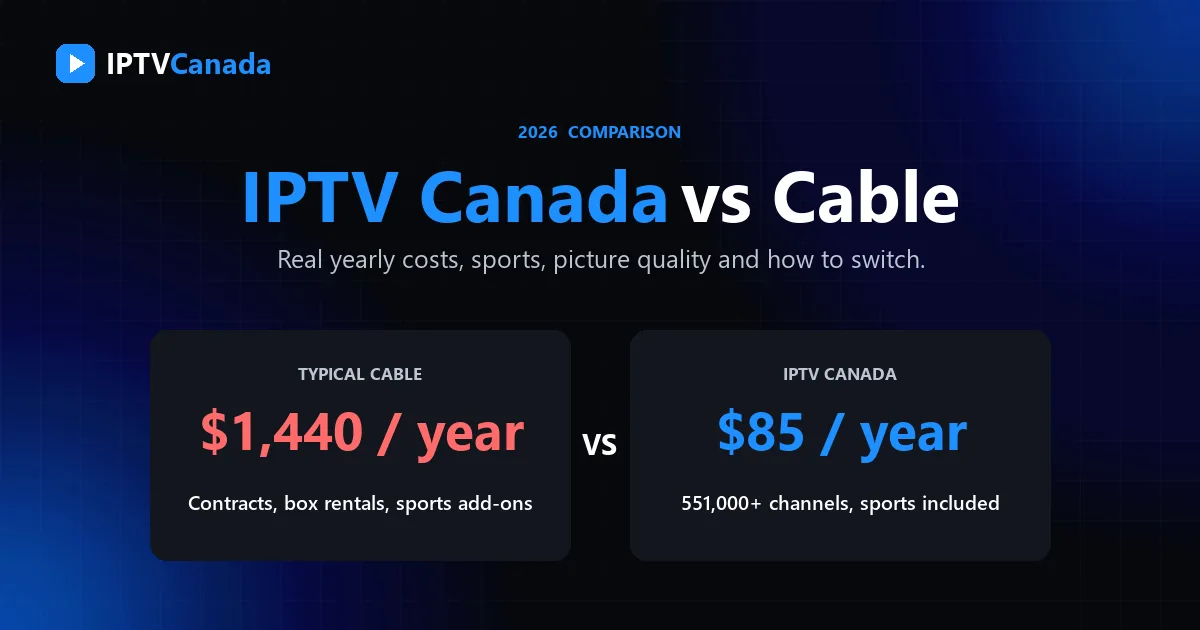
- Lower cost: cable bills in Canada often top $120 a month. IPTV costs a fraction of that.
- No long contracts: pay month to month or save with a longer plan.
- Take it anywhere: cable stays in the living room. IPTV works on your phone or tablet at the cottage, on the road or on your commute.
- More variety: thousands of international channels that cable packages don’t carry.
The Bottom Line
IPTV isn’t the future of TV — it’s already here. It gives you more control, more content and a much smaller bill.
Tired of paying for channels you never watch and renting old equipment? It might be time to make the switch.
Ready to explore? See why viewers call us the best IPTV service in Canada and start cutting the cord today.